
Most people never think about it until a recipe says “use non-iodized salt,” or a friend mentions that their fancy pink salt has no iodine. Then the questions start. Is one healthier? Does it change the taste? Should you switch?
We produce and export Himalayan salt, which is naturally non-iodized, so you might expect us to tell you to skip iodized salt. We won’t. Here is the honest answer, followed by the practical details that most articles leave out.
The Short Answer
For most households, iodized salt is the safer everyday choice, because it is one of the simplest ways to get enough iodine. Non-iodized salt is not unhealthy, though. It is the better choice for pickling, canning and some fermentation, and some people are told by their doctor to avoid iodine for a while. Both types contain about the same amount of sodium, so neither is “healthier” in that sense.
What Is the Difference?
Both are mostly sodium chloride. Iodized salt has a small amount of iodine added, usually as potassium iodide or potassium iodate. Non-iodized salt has nothing added. That group includes most sea salt, kosher salt, pickling salt, rock salt and Himalayan pink salt.
Iodine was added to salt because it is a cheap, reliable way to get an essential nutrient into almost every diet. Your thyroid needs iodine to make the hormones that control metabolism, and during pregnancy those hormones are critical for a baby’s brain development. In the US, salt has been iodized since the 1920s, when goitre (a swollen thyroid) was common in parts of the country. According to the NIH Office of Dietary Supplements, iodized salt in the US contains about 45 micrograms of iodine per gram.
Sodium is the same story either way. A teaspoon of iodized table salt and a teaspoon of non-iodized fine salt carry roughly the same sodium, so the health advice about eating less salt applies to both.
Who Needs Iodized Salt Most?
Iodine needs are higher, or harder to meet, for some groups:
- Pregnant and breastfeeding women. In the US, recommended intake rises from 150 mcg a day for adults to 220 mcg in pregnancy and 290 mcg while breastfeeding.
- People who eat little or no dairy, eggs or seafood. These are the main natural sources of iodine in Western diets, so vegans and many vegetarians can fall short.
- Anyone who cooks mainly with specialty salts. If your only salt is Himalayan, sea or kosher salt, your salt shaker is giving you almost no iodine.
If you are in one of these groups, iodized salt, or another iodine source agreed with your doctor, is worth taking seriously.
Why Use Non-Iodized Salt?
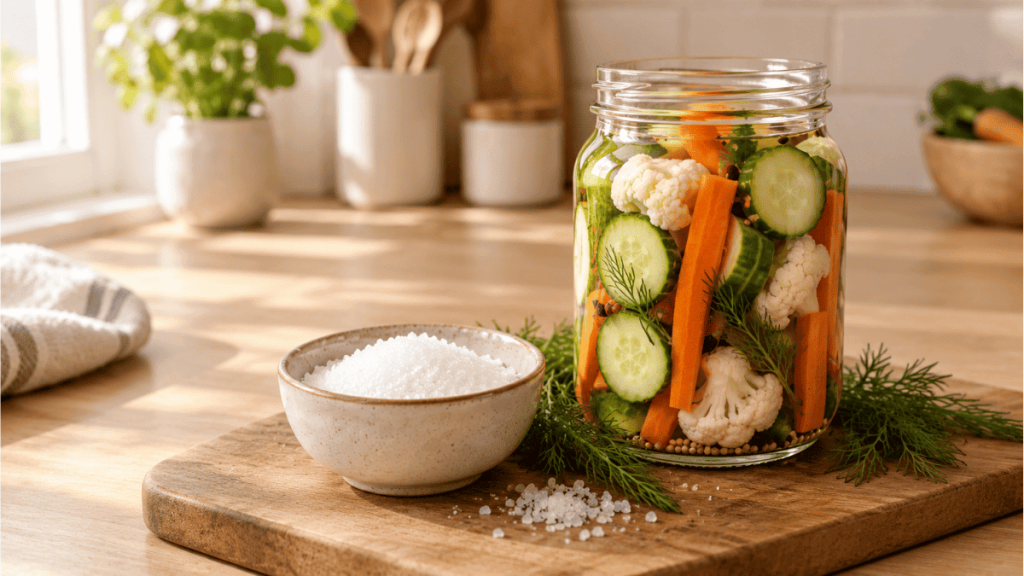
Non-iodized salt has real advantages in the kitchen.
Pickling and canning
Canning guides generally recommend pure salt without additives. Anti-caking agents in table salt can make brine cloudy, and iodine can sometimes darken or discolour vegetables. It is not dangerous, but it does not look good in a jar.
Fermentation
Many people who make sauerkraut, kimchi and pickles prefer non-iodized salt, worried that iodine will slow the bacteria. The evidence that normal iodine levels ruin a ferment is limited, and plenty of people ferment successfully with iodized salt. Still, if you want to remove one variable, non-iodized salt is the cautious choice.
Brining, curing and baking
Large amounts of salt are used in brining and curing, and some cooks notice a faint metallic note from iodized salt when it is used heavily or sprinkled on top of food. In everyday cooking, where salt dissolves into a dish, most people cannot taste a difference.
Texture
Coarse, flaky and crystal salts, including coarse Himalayan salt, are almost always non-iodized. Cooks choose them for crunch, for grinders, or for finishing a dish.
Who Should Avoid Iodized Salt?
Very few people need to avoid iodine altogether, and it should be a doctor’s decision, not a guess. The most common case is someone preparing for radioactive iodine treatment for thyroid cancer, who is usually put on a low-iodine diet for a short time. Some people with specific thyroid conditions may also be given advice about iodine intake.
If you have not been told to avoid iodine, there is no general health reason to steer clear of iodized salt.
How Do I Know If My Salt Is Iodized?
Check the label. Iodized salt will say “iodized” or “iodised”, or list potassium iodide or potassium iodate in the ingredients.
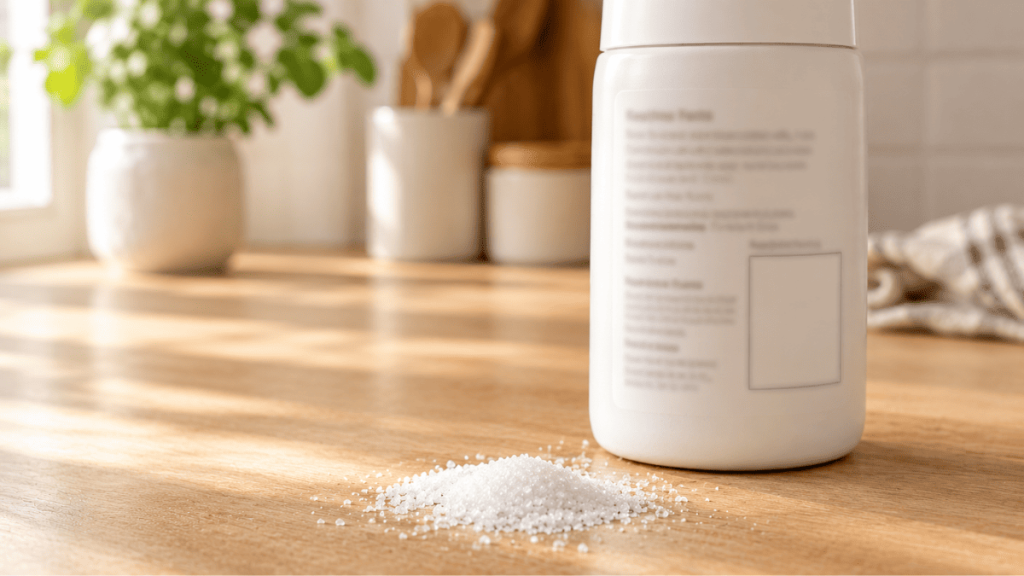
In the US, the FDA requires table salt without added iodine to carry the statement “This salt does not supply iodide, a necessary nutrient.” If you see that line, your salt is non-iodized.
If a salt is pink, grey, coarse, flaky or labelled “sea salt”, “kosher salt”, “rock salt” or “Himalayan salt”, assume it is non-iodized unless the label clearly says otherwise.
One practical tip: iodine in salt slowly fades when the salt is exposed to moisture, heat and light. Keep iodized salt sealed, away from the stove, and don’t keep an open container for years.
What Happens If You Don’t Use Iodized Salt?
Nothing, if you get iodine from other foods. Milk, yoghurt, cheese, eggs, white fish and shellfish are good sources. Seaweed can be very high in iodine, sometimes too high, so it is not a reliable everyday source.
The risk comes when someone drops iodized salt and also eats little dairy, eggs or fish. Mild iodine deficiency does not cause obvious symptoms at first, which is exactly why it is easy to miss. Over time it can affect thyroid function, and during pregnancy even a mild shortfall matters.
Why Does the UK Not Use Iodized Salt?
Unlike the US and many other countries, the UK has never required salt to be iodized. Most British iodine comes from milk and dairy, partly because iodine is added to cattle feed. For decades that was enough.
The picture is less comfortable now. The NHS says adults need 140 micrograms of iodine a day and lists dairy, eggs, fish and shellfish as the main sources, without mentioning iodised salt at all. Meanwhile, plant-based milks, which are often not fortified with iodine, have become popular. A review by the Institute of Food Science and Technology points to UK survey data showing that iodine levels in pregnant women fall short of the WHO benchmark, and to research finding iodised salt available in only around 12% of UK stores.
So in the UK, iodised salt is allowed but hard to find, and many people rely entirely on dairy and fish. If you avoid both, it is worth talking to your GP or pharmacist about your iodine intake.
Where Can I Buy Non-Iodized Salt in the UK?
Easily. Because the UK does not iodize salt by default, most salt on UK shelves is already non-iodized. Supermarket table salt, sea salt, kosher salt, rock salt and Himalayan pink salt are almost always iodine-free. Health food shops and online grocers stock coarse and pickling salts too.
For businesses that need larger quantities, such as food manufacturers, bakeries, picklers and brands, buying in bulk from a supplier is usually more practical. Mount Grain supplies Himalayan pink salt and natural rock salt in bulk to UK and European buyers through our UK office in Ilford. We do not sell retail packs to individual customers.
Does Himalayan Pink Salt Have Iodine?
Not in any meaningful amount. Himalayan pink salt comes from ancient salt deposits in the Salt Range of Pakistan, including the Khewra Salt Mine, and it is not naturally rich in iodine. Unless iodine has been added and the label says so, treat pink salt as non-iodized.
You will often read that pink salt contains “84 trace minerals.” It does contain small amounts of minerals such as potassium, magnesium and calcium, which give it its colour. But the amounts are tiny. The Iodine Global Network cites research suggesting you would need to eat around 30 grams of pink salt a day for those minerals to matter, far more salt than anyone should eat.
Choose Himalayan salt because you like its flavour, colour or texture. Don’t choose it as a health upgrade over iodized salt, and if it is your only salt, make sure you get iodine elsewhere.
Iodized vs Non-Iodized: A Guide for Food Brands and Importers
If you are sourcing salt for a product or a market, the choice depends on who will use it.
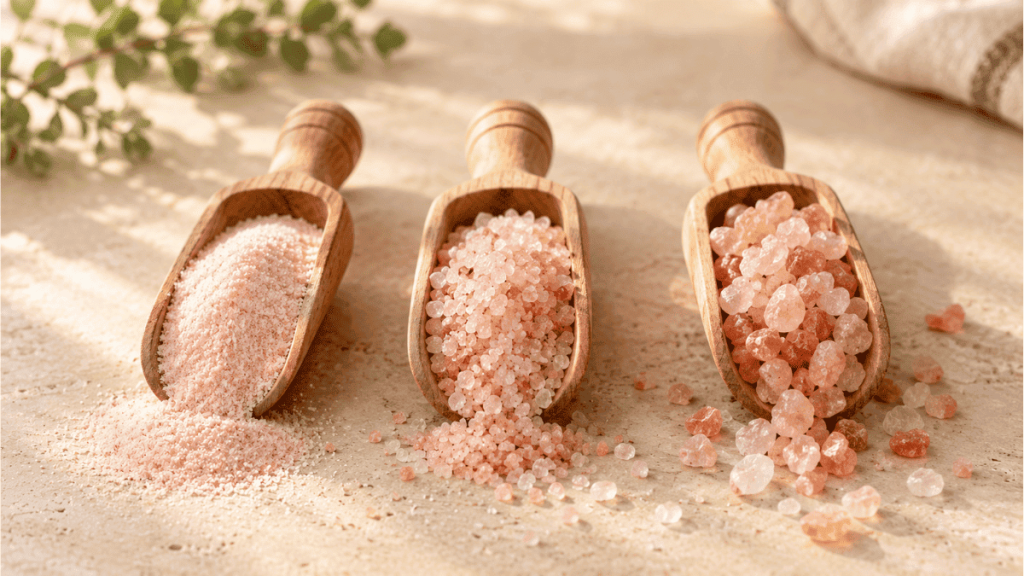
Retail table salt
Many countries require table salt to be iodized, and some require iodine at specific levels. Before ordering, check the rules in the market where the salt will be sold. In countries without that rule, such as the UK, an iodized option can still be a useful selling point for health-conscious shoppers.
Food manufacturing
Picklers, fermenters, cheesemakers, bakers and meat curers usually specify non-iodized salt, often in a particular grain size.
Gourmet and finishing salt
Coarse, crystal and grinder salts are almost always sold non-iodized.
Labelling
If salt is iodized, the label must say so, and the iodine compound must appear in the ingredients. Labelling rules differ by country, so agree the wording with your local food authority or regulatory adviser.
At Mount Grain, we supply Himalayan pink salt in both non-iodized and iodized versions, in fine, coarse and granule grades. Salt can be packed in bulk bags or retail packs under your own brand through our private label service. Our edible salt is FDA registered and Halal and Kosher certified. If you need salt for a specific market or product, request a wholesale quote and tell us the grade, packing and destination.
FAQs
Which is better, iodized or non-iodized salt?
For most households, iodized salt is the better everyday choice because it helps you get enough iodine. Non-iodized salt is better for pickling, canning and some fermentation. Both have about the same sodium.
Why use non-iodized salt?
For pickling and canning, where additives can cloud brine or discolour vegetables, and for some fermentation, brining and finishing. It is also used by people told by their doctor to follow a low-iodine diet.
Who should avoid iodized salt?
Mainly people preparing for radioactive iodine treatment, and anyone given specific medical advice about iodine. Most people do not need to avoid it.
How do I know if my salt is iodized?
Check the label for “iodized” or “iodised”, or for potassium iodide or iodate in the ingredients. In the US, non-iodized table salt must state that it does not supply iodide.
What happens if I don’t use iodized salt?
Nothing, if you get enough iodine from dairy, eggs or seafood. If you avoid those foods too, you may not get enough iodine over time.
Why does the UK not use iodized salt?
The UK has never required it, and most iodine in British diets has come from milk and dairy. Iodised salt is allowed but available in only a small share of UK stores.
Where can I buy non-iodized salt in the UK?
Most UK supermarket salt is already non-iodized, including table, sea, kosher, rock and Himalayan salt. Businesses can buy non-iodized salt in bulk from suppliers.
Does Himalayan pink salt have iodine?
Not in any meaningful amount, unless iodine has been added and the label says so.