
A Himalayan salt lick is a solid piece of natural rock salt that animals lick to get sodium and chloride. Farmers hang them in stables, set them in pastures, or tie them near water troughs so animals can help themselves whenever they want salt. They work well as a free-choice salt source. They are not a complete mineral supplement, and an animal with heavy salt needs may not get enough from a lick alone.
That last part matters. Most pages selling salt licks skip it. This guide covers what a Himalayan lick actually gives an animal, how much salt different livestock need, how to place a lick so it lasts, and the mistakes that cause problems.
What a Himalayan salt lick is
Himalayan salt licks are cut from rock salt mined in Pakistan’s Salt Range, the same deposits that supply Khewra Salt Mine. The salt is pink to deep orange because of small amounts of iron and other minerals in the rock.
Licks are sold in a few common forms:
- Natural chunks with a drilled hole and a rope for hanging
- Rough-shaped blocks that sit in a holder or on the ground
- Pressed or cut shapes for stables and feeders
Chemically, a Himalayan lick is mostly sodium chloride. The trace minerals are real, but they’re present in very small amounts. So think of a Himalayan lick as a clean, natural salt source with no binders, molasses or added chemicals, not as a mineral supplement.
Himalayan lick vs white salt block vs mineral block
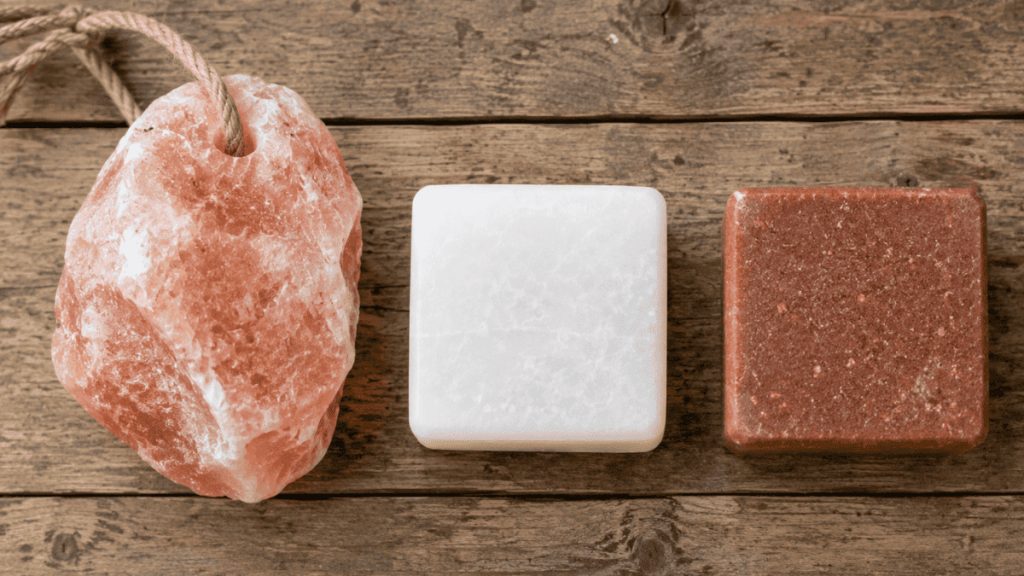
Buyers often ask which type is “better.” It depends on what the animal is missing.
| Himalayan salt lick | White salt block | Trace mineral block | |
|---|---|---|---|
| Main content | Natural rock salt (mostly sodium chloride) | Refined salt (sodium chloride) | Salt plus added minerals such as zinc, copper, selenium, cobalt |
| Additives | None | Sometimes binders | Added minerals, sometimes binders |
| Supplies sodium and chloride | Yes | Yes | Yes |
| Covers other mineral needs | No, only trace amounts | No | Partly, depending on the formula |
| Hardness | Very hard, lasts long | Hard (pressed) | Varies |
| Best for | Free-choice salt in stables and pastures, owners who want a natural, additive-free product | Low-cost salt supply | Herds on mineral-poor forage |
A common approach on farms is to offer a salt lick for free-choice salt and feed a species-appropriate mineral mix separately. The lick takes care of salt cravings. The mineral mix covers the gaps in the forage.
How much salt do animals need?
Horses
Horses have one of the best-documented salt requirements. Based on the Nutrient Requirements of Horses (NRC, 2007), a 500 kg horse at rest on a cool day needs about 10 g of sodium a day. That works out to roughly 25–30 g of salt. Work and hot weather push the requirement up because horses lose a lot of sodium in sweat.
Here’s where licks fall short. To meet that baseline from a lick, a 500 kg horse would need to lick away roughly 1 kg of salt a month, and many horses simply don’t lick that much. Equine nutritionists often recommend checking how fast the lick is shrinking. If it barely changes over a month, add a measured amount of loose salt to the feed as well.
Cattle
Cattle have rough tongues and use licks easily, so they tend to get more from a block than horses or sheep do. Their salt needs depend on body weight, milk production, climate and how salty the forage and water already are. Lactating cows and cattle in hot weather need more. In large herds, one lick isn’t enough. Dominant animals crowd it and younger ones miss out, so put out several licks spread apart.
Goats
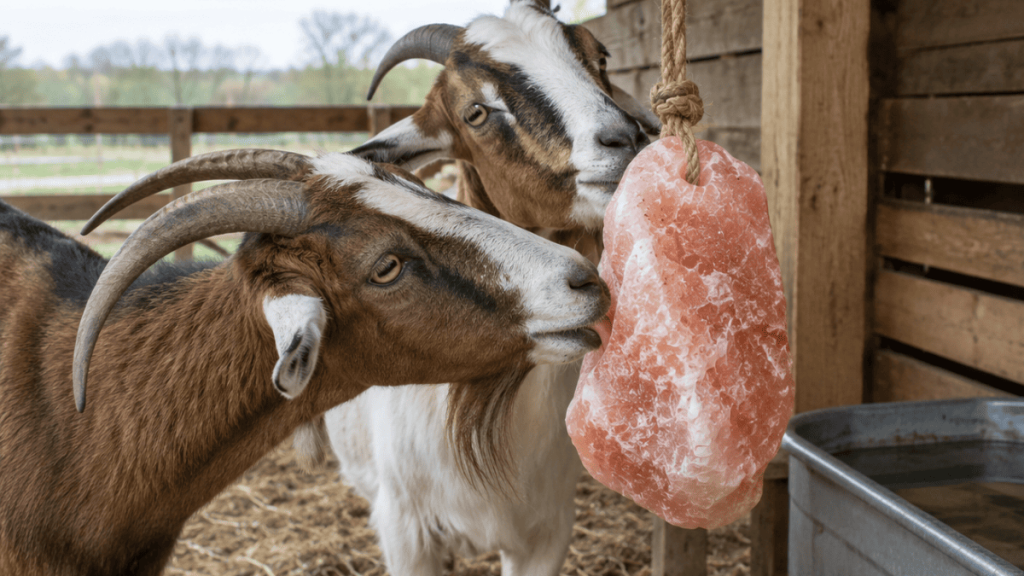
Goats are curious and usually take to licks quickly. Hang the lick off the ground or use a holder, because goats will stand on, soil and knock over anything at ground level. Goats need more copper than sheep, so they usually get a goat-specific mineral mix as well as salt.
Sheep
Sheep can use salt licks, but there’s one serious caution: sheep are very sensitive to copper. Mineral blocks made for cattle or goats can contain enough copper to poison sheep over time. A plain Himalayan lick isn’t a meaningful copper source, but if you keep mixed flocks, check every mineral product the sheep can reach. Sheep also have softer tongues than cattle, so they may get less from a hard block.
Deer and wildlife
Salt licks also attract deer and other wildlife. Be careful with this one. In some US states, putting out salt to attract deer counts as baiting and is restricted or illegal, especially during hunting season. Check your state’s wildlife rules before setting out licks for wild animals.
Where and how to place a salt lick
How you place a lick makes a big difference to how long it lasts and how much animals use it.
Keep it near water. Animals drink after taking salt, and access to fresh water is the single most important safety rule with any salt product.
Keep it out of the rain. Salt dissolves in water. That includes Himalayan salt, whatever some sellers claim. A lick left in open rain will melt, crack and leave salty mud behind. Hang it under a roof, inside a shelter or in a covered holder.
Hang it at a comfortable height. For horses, roughly chest to shoulder height works well. For goats and sheep, lower, but off the ground so it stays clean. Natural chunks with a drilled hole and rope are the easiest to hang.
Use more than one in groups. One lick per small group is a sensible starting point. In larger herds, spread several licks out so less dominant animals get a turn.
Keep it clean. Move or wipe licks that get covered in dirt or droppings. Animals avoid dirty licks.
Common mistakes with salt licks
- Assuming the lick covers all minerals. It covers salt. Selenium, copper, zinc and other minerals come from forage or a proper mineral supplement.
- Limited water. Salt poisoning in livestock is usually linked to water shortage, not to the salt lick itself. If water freezes, breaks or runs dry, salt becomes a risk.
- Using a cattle mineral block for sheep. The copper content can harm sheep over time.
- Leaving licks in the open. You end up buying replacements far more often.
- Never checking use. A lick that never shrinks may mean the animal isn’t getting enough salt from it. A lick that disappears very fast may mean the animal is salt-hungry or bored. Both are worth watching.
- Not asking a vet. For pregnant, lactating, working or sick animals, ask a vet or livestock nutritionist before changing salt or mineral routines.
Buying Himalayan salt licks in bulk
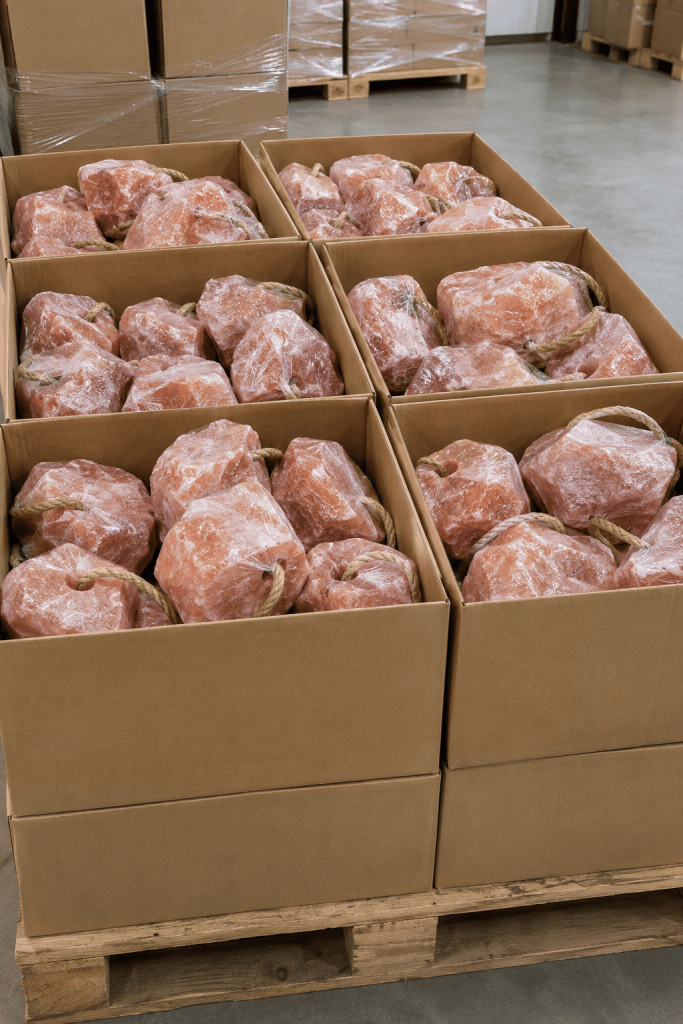
For feed stores, farm suppliers, tack shops and pet brands, Himalayan salt licks are a steady product. They don’t spoil, they’re light to stock compared with bagged feed, and they sell all year.
When you compare suppliers, ask about:
- Sizes and weights. Licks come in several sizes for different animals. Ours are confirmed with your quote.
- Hole and rope options. Pre-drilled licks with rope sell better in stables and pet shops.
- Packing. Shrink-wrap, cartons or bulk bags, depending on whether you sell retail or wholesale.
- Private label. Your brand name and labels on the pack.
- Consistency. Similar colour, size and weight across batches.
- Export documents. Paperwork that matches your country’s import rules.
Mount Grain supplies Himalayan animal lick salt from Pakistan’s Salt Range in bulk for distributors, farm suppliers and brands. Sizes, rope options and packing are confirmed with your quote. We also offer private label packing for brands that want their own label.
Or see our full wholesale terms.
Frequently asked questions
Are Himalayan salt licks good for horses?
Yes, as a free-choice salt source. They are natural and additive-free. Many horses don’t lick enough to meet their full daily salt need, especially in hot weather or work, so many owners also add measured loose salt to feed.
Is a salt lick enough for a horse?
Often not. A 500 kg horse needs roughly 25–30 g of salt a day at rest. Many horses lick far less than that. Check how quickly the lick wears down and add loose salt to the feed if needed.
Can cattle, goats and sheep use the same salt lick?
They can share a plain salt lick. Be careful with mineral blocks, because products made for cattle or goats can contain too much copper for sheep.
Do Himalayan salt licks dissolve in rain?
Yes. All salt dissolves in water. Keep licks under a roof or in a covered holder so they last.
How long does a salt lick last?
It depends on the size of the lick, the number of animals and the weather. A lick kept dry and shared by one or two animals lasts much longer than one in an open field with a herd.
Can animals eat too much salt from a lick?
Healthy animals with constant access to fresh water usually regulate their salt intake well. Problems mostly happen when water is limited. If an animal is eating a lick unusually fast, talk to a vet.
Is a Himalayan salt lick a mineral supplement?
No. It is mostly sodium chloride with small amounts of other minerals. It provides salt, not a balanced mineral supply.
Can I buy Himalayan salt licks in bulk for resale?
Yes. Mount Grain supplies animal lick salt in bulk with private label options. Sizes, rope options and packing are confirmed with your quote.