
Importing Himalayan salt from Pakistan comes down to seven steps:
- Choose a manufacturer, not just a trader.
- Approve samples and lock the specs.
- Check your country’s food import rules.
- Confirm the HS code and duty with your broker.
- Get the export documents right.
- Agree on shipping terms.
- Clear customs and inspect on arrival.
None of these steps are complicated on their own. Most problems happen when an importer skips one, usually labelling or paperwork, and finds out at the port.
This guide walks through each step for buyers in the United States and the United Kingdom, with notes for other markets where they differ.
Why import directly from Pakistan?
All genuine Himalayan salt comes from one place: the Salt Range in Punjab, Pakistan, home of the Khewra Salt Mine. Salt sold as “Himalayan” anywhere in the world started its journey there.
For years, a lot of Pakistani salt reached buyers indirectly, especially through Indian processors who imported raw salt, then ground and packed it. That route has largely closed. In 2025 India banned imports of Pakistani goods, including shipments routed through third countries, and the pink salt trade through India came to a near standstill.
For importers, buying direct from a Pakistani manufacturer now gives:
- Clear origin. You know where the salt was mined and processed.
- Fewer hands in the chain. Each middleman adds cost and another place where quality can slip.
- Direct control over specs. Grain size, colour grade and packaging are agreed with the people who actually make the product.
Step 1: Choose the right supplier
This is the decision that affects everything else. Pakistan has many salt businesses, from large processors to small traders who resell other people’s stock.
When you shortlist suppliers, ask:
- Are you the manufacturer or a trader? Ask where the salt is crushed, graded and packed.
- Which certifications do you hold? Typical certifications for edible salt are FDA food facility registration, Halal and Kosher. Ask for copies and check the dates.
- Which product forms can you supply? Fine, coarse, granules, raw chunks, salt lamps, animal licks, iodized and non-iodized.
- Can you pack under my brand? If you plan to sell retail, you need private label packing.
- Which countries do you already ship to? A supplier who already exports to your market will know its paperwork.
- How do you handle export documents? You want a supplier who prepares them as standard, not one who learns on your order.
A supplier who answers these questions clearly and quickly is usually the one who will also handle problems clearly and quickly.
Step 2: Approve samples and lock the specs
Never place a first container order without samples. Himalayan salt varies in colour, from pale pink to deep salmon, and in how finely it is graded. “Coarse” means different things to different suppliers.
Before you order, agree in writing on:
- Product type: for example, food-grade pink salt or raw rock salt chunks
- Grain size: fine, coarse or granules, with a size range
- Colour grade: light pink, dark pink, or mixed
- Iodized or non-iodized: this affects labelling in some markets (see Step 3)
- Packaging: bulk bags, jumbo bags, or retail packs such as jars, pouches and grinders
- Labelling: whose brand, what text, and in which language
Keep a retained sample from the approved batch. If a later shipment looks different, you have something to compare it against.
Step 3: Check your country’s import rules
This is where most first-time importers run into trouble. Salt is a low-risk food, but it is still a food, and food imports have rules.
Importing into the United States
FDA food facility registration
Foreign facilities that manufacture, process or pack food for US consumption must be registered with the FDA. Ask your supplier for their FDA registration details.
Prior Notice
The FDA must be notified of every food shipment before it arrives in the US. For ocean freight, the deadline is no later than 8 hours before arrival. Shipments without valid Prior Notice can be refused or held at the port. Your customs broker usually files it.
Foreign Supplier Verification Program (FSVP)
Under FSVP, the US importer, which means you and not the supplier, is responsible for verifying that the foreign supplier produces food safely. That usually means keeping records of supplier approval, certifications and any checks you carry out.
Labelling
Retail salt must meet FDA food labelling rules. One rule most importers don’t know about: table salt that is not iodized must carry the statement “This salt does not supply iodide, a necessary nutrient.” If you are importing non-iodized pink salt for retail, build this into your label design from the start. (Not sure which type to stock? See our guide to iodized vs non-iodized salt.)
Country of origin
US Customs requires imported goods to be marked with their country of origin, for example “Product of Pakistan”.
Importing into the United Kingdom
EORI number
You need a UK EORI number to import goods into Great Britain. It’s free and usually quick to get.
Food labelling
Pre-packed food sold in the UK must follow UK food information rules, including the name and address of the UK business responsible for the food. If you are selling under your own brand, that business is usually you.
Trade preferences
Pakistan is one of the countries covered by the UK’s Developing Countries Trading Scheme (DCTS), which can reduce or remove import duty on many goods. Check the exact rate for your product with the UK Trade Tariff tool or your broker.
Other markets
The EU, Canada, Australia and the Gulf states each have their own food import and labelling rules. The pattern is the same everywhere: the importer of record is responsible for compliance. A good customs broker in your country is worth far more than they cost on your first few shipments.
Step 4: Confirm the HS code and duty
Salt falls under HS heading 2501. In Pakistan, edible salt is exported under 2501.00.10. Your country will apply its own national subheading, and that subheading decides the duty rate.
Don’t rely on a figure from a blog post, including this one. Rates and preferences change. Before you calculate your landed cost:
- US: check the Harmonized Tariff Schedule
- UK: check the UK Trade Tariff
- Everywhere: ask your broker to confirm the code for your exact product, because edible salt, rock salt chunks and salt lamps may be classified differently
Step 5: Get the documents right
These are the documents a Himalayan salt shipment usually travels with:
| Document | What it is | Who prepares it |
|---|---|---|
| Commercial invoice | Product, quantity, value, Incoterms | Supplier |
| Packing list | Number of bags or cartons, weights, marks | Supplier |
| Bill of lading | Shipping document from the carrier, needed to collect the goods | Shipping line or forwarder |
| Certificate of origin | Confirms the goods are of Pakistani origin, needed for some trade preferences | Supplier, issued through a chamber of commerce |
| Certification copies | FDA registration, Halal, Kosher | Supplier |
| Prior Notice confirmation (US) | Proof the FDA was notified | Importer’s broker |
| Import declaration | Customs entry in your country | Importer’s broker |
Some buyers and some markets ask for extra documents, such as a fumigation certificate for wooden pallets. Tell your supplier early what your broker needs. It costs nothing to add a document before shipping and a lot to fix it after the container has sailed.
Step 6: Agree on shipping terms
FCL or LCL
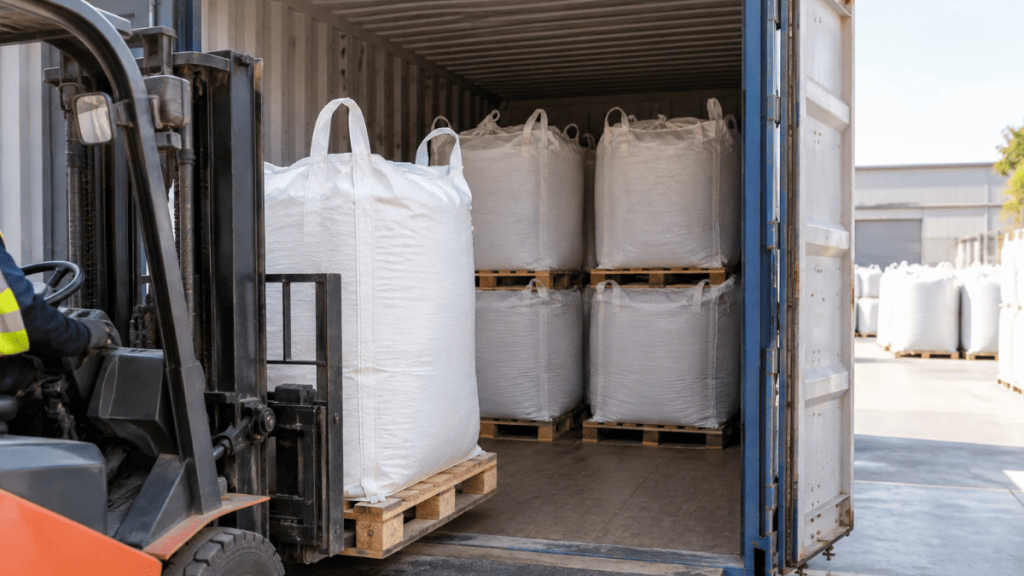
A full container load (FCL) gives you a container to yourself, so it’s cheaper per tonne and the goods are handled less. Less-than-container load (LCL) lets you test the market with a smaller order, but costs more per tonne.
Incoterms
The two most common terms for salt are:
- FOB (Free on Board): the supplier delivers the goods onto the ship at a Pakistani port, usually Karachi. You arrange and pay for sea freight and insurance.
- CIF (Cost, Insurance and Freight): the supplier pays for freight and insurance to your port. It’s simpler for first-time importers, but you have less control over the shipping line.
Protect against moisture
Salt absorbs moisture. Ask for lined bags or moisture-resistant packaging, and avoid shipping retail packs in thin outer cartons that can soften in a humid container.
Step 7: Clear customs and inspect on arrival
Your customs broker files the import entry, pays duty and taxes on your behalf, and handles any questions from customs or food authorities. Once the goods are released:
- Inspect the shipment against your approved sample: colour, grain size, packaging and labels.
- Check for damage or moisture before you sign off delivery.
- Store the salt dry, off the floor and away from humidity, especially if it’s iodized, because iodine levels fall faster in damp conditions.
Common mistakes first-time importers make
- Skipping samples. The first container is not the time to find out what “dark pink coarse” means to your supplier.
- Forgetting labelling rules. Labels are the most common reason retail salt gets held up. In the US, non-iodized table salt needs the iodide statement.
- No Prior Notice for US shipments. This can get a container refused.
- Guessing the HS code. A wrong code can mean the wrong duty, delays or penalties.
- Buying from a trader without knowing it. You lose control over consistency from one batch to the next.
- Cheap packaging. Saving a little on bags can cost a lot in damaged or caked product.
Importing from Mount Grain
Mount Grain is a Himalayan salt manufacturer and exporter based in Lahore, with a UK office in Ilford. We supply importers, wholesalers and brands in more than 20 countries with:
- Food-grade pink salt (fine, coarse and granules), iodized or non-iodized
- Raw rock salt chunks
- Salt lamps and animal lick salt
- Private label and white label packing
Our edible salt is FDA registered, Halal and Kosher certified, and we prepare export documents as standard. We ship FOB or CIF, and MOQ, packaging and lead time are confirmed with your quote.
Or read our wholesale terms.
Frequently asked questions
Can I import Himalayan salt from Pakistan into the US?
Yes. Salt is imported into the US as a food, so the supplier’s facility must be registered with the FDA, Prior Notice must be filed before each shipment arrives, and the US importer must meet FSVP requirements. Retail labels must follow FDA labelling rules.
Do I need a licence to import salt into the UK?
Salt doesn’t usually need a special import licence in the UK, but you do need a UK EORI number to import goods. Pre-packed salt sold in the UK must also follow UK food labelling rules, including the name and address of the UK business responsible for it.
What is the HS code for Himalayan salt?
Salt falls under HS heading 2501. Pakistan exports edible salt under 2501.00.10. Your country applies its own subheading, so confirm the exact code with your customs broker.
Is there import duty on Himalayan salt?
It depends on your country and the exact product. Pakistan is covered by trade preference schemes in some markets, including the UK’s DCTS. Check your national tariff tool or ask your broker for the current rate.
What documents do I need to import Himalayan salt?
Usually a commercial invoice, packing list, bill of lading, certificate of origin and copies of the supplier’s certifications. US shipments also need Prior Notice. Your broker may ask for more, depending on the product.
Is FOB or CIF better for importing salt?
CIF is simpler for first-time importers because the supplier arranges freight and insurance. FOB gives you more control over shipping and is often cheaper once you have a freight forwarder you trust.
Does non-iodized pink salt need a special label in the US?
Yes. Table salt without added iodide must carry the statement “This salt does not supply iodide, a necessary nutrient.”
Can Mount Grain pack salt under my own brand?
Yes. We offer private label and white label packing for importers and brands. Packaging options and MOQ are confirmed with your quote.